
Walking in Self-Control: Managing Emotions, Reactions, and Choices Wisely
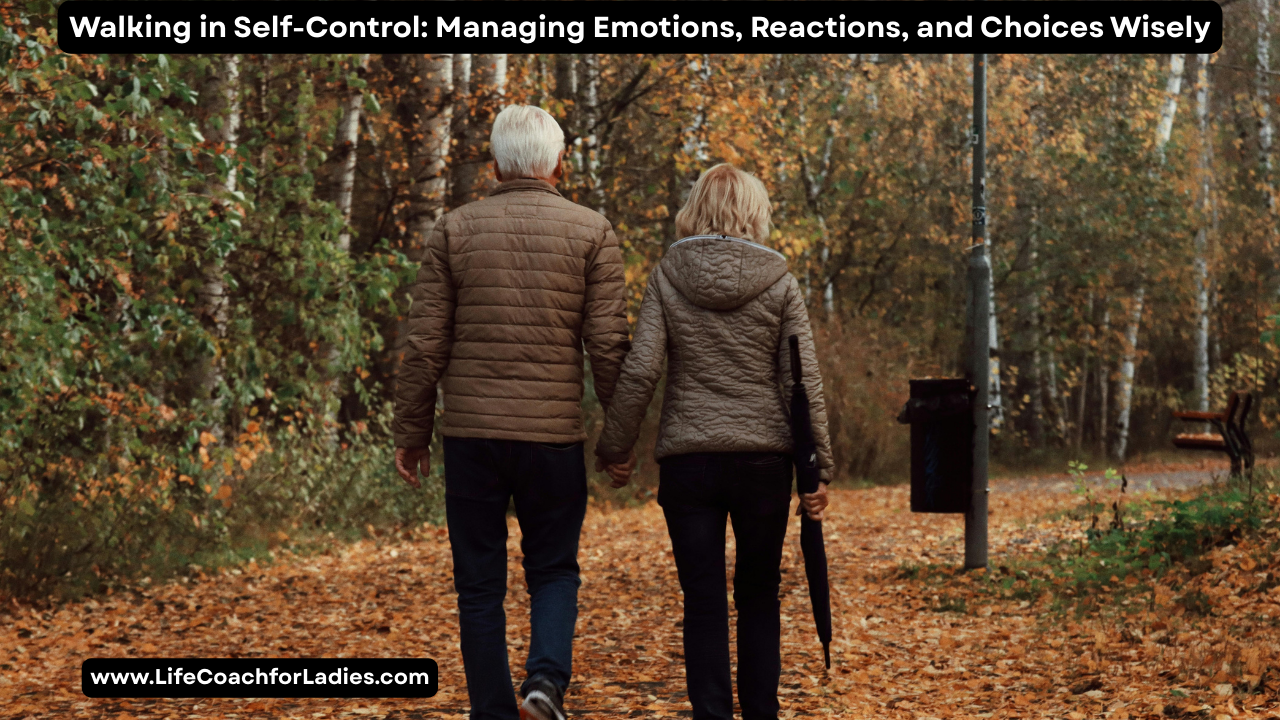
September 17 marks Constitution Day, a reminder of the wisdom required for self-governance. The framers of the Constitution understood something timeless: freedom without restraint collapses into chaos. Laws were established not to restrict dignity, but to preserve it. In much the same way, Scripture teaches that self-control protects spiritual freedom. A life without internal governance becomes reactive, unstable, and easily led astray. But when the Spirit governs the heart, freedom flourishes.
When Emotions Feel Loud
Emotions are God-given, yet unmanaged emotions often lead faithful women to say, decide, or react in ways they later regret. Self-control is not emotional suppression; it is spiritual maturity expressed through wise response rather than impulsive reaction.
Scripture does not call women to ignore emotion, but to govern it with truth.
To walk in self-control is to steward emotions, thoughts, and actions in alignment with God’s wisdom.
The Lie We Often Walk With (L...
Walking in Patience: Trusting God’s Timing Without Rushing the Process
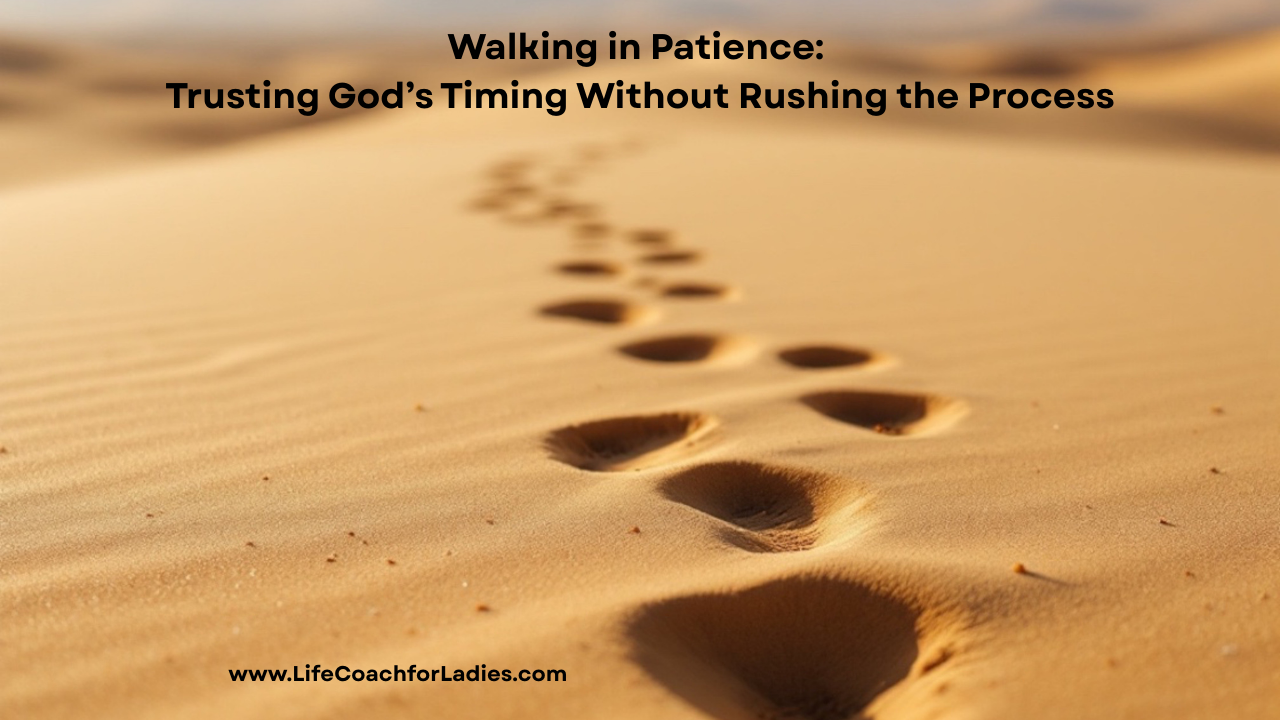
When Waiting Feels Uncomfortable
Few things test faith like waiting. Christian women often carry clear desires, earnest prayers, and faithful effort—yet answers seem delayed. In these seasons, impatience does not always look dramatic. It often shows up quietly as anxiety, overthinking, or the urge to take matters into one’s own hands.
Scripture does not dismiss waiting as wasted time. God uses waiting to form trust, maturity, and discernment.
To walk in patience is to remain faithful without forcing outcomes, trusting that God’s timing is purposeful and precise.
The Lie We Often Walk With (Lie-Locked Living)
The Lie: If God were truly working, this would be happening faster.
This lie pressures women to rush decisions and manipulate outcomes. It frames delay as denial rather than development.
Lie-Locked Living shows up as restlessness, control-seeking, and discouragement during seasons of waiting.
God’s Word reminds us that delay is often preparation, not neglect.
Scripture Anc...
Walking in Growth: Becoming More Like Christ Over Time
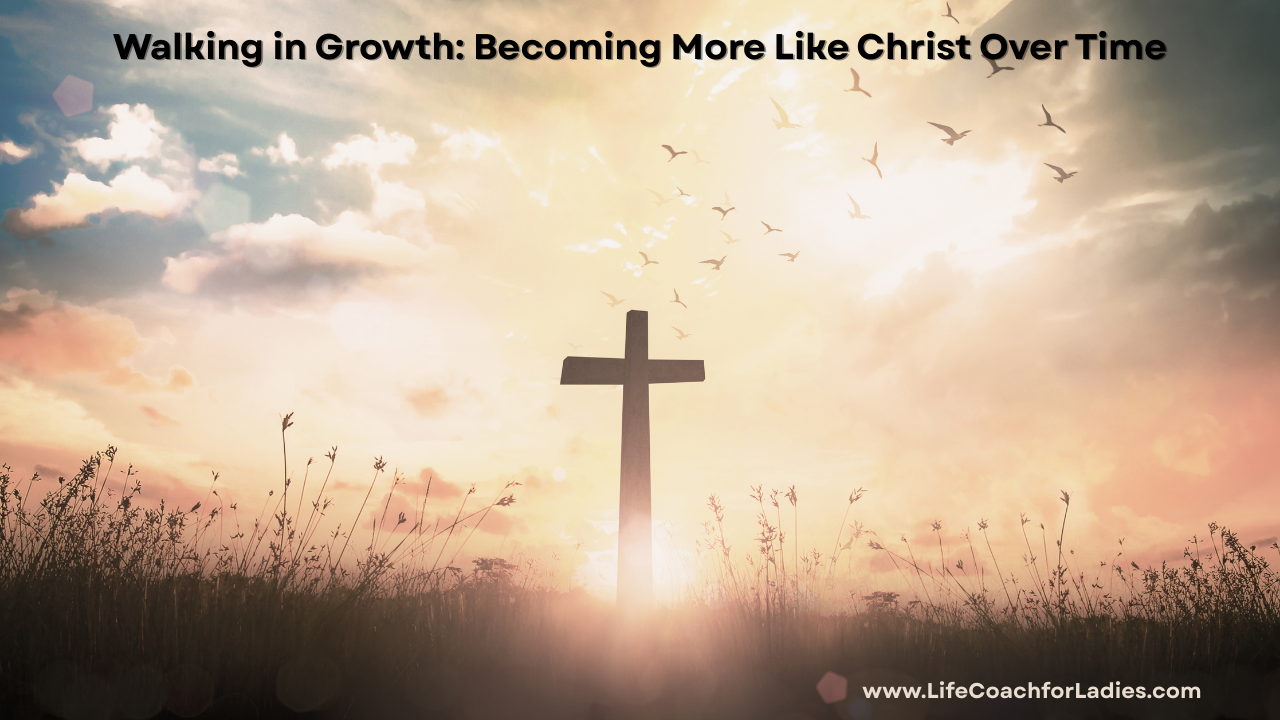
When Growth Feels Slow and Uneven
Spiritual growth rarely follows a straight line. Many faithful women expect maturity to look like constant progress, fewer struggles, and steady confidence. When old patterns resurface or growth feels uneven, discouragement can quietly creep in.
Scripture offers a steadier, kinder vision of growth. God forms His daughters patiently, shaping character over time rather than rushing transformation.
To walk in growth is to trust the process God is using to form Christlikeness—step by step, season by season.
The Lie We Often Walk With (Lie-Locked Living)
The Lie: If I were truly growing, I would struggle less by now.
This lie equates growth with ease. It leads women to misinterpret ongoing refinement as failure rather than formation.
Lie-Locked Living shows up as discouragement, self-criticism, and the temptation to measure maturity by emotion rather than obedience.
God’s Word reminds us that growth includes pruning, repetition, and grace.
Scriptur...
Walking in Gratitude: Cultivating a Thankful Heart in Every Season
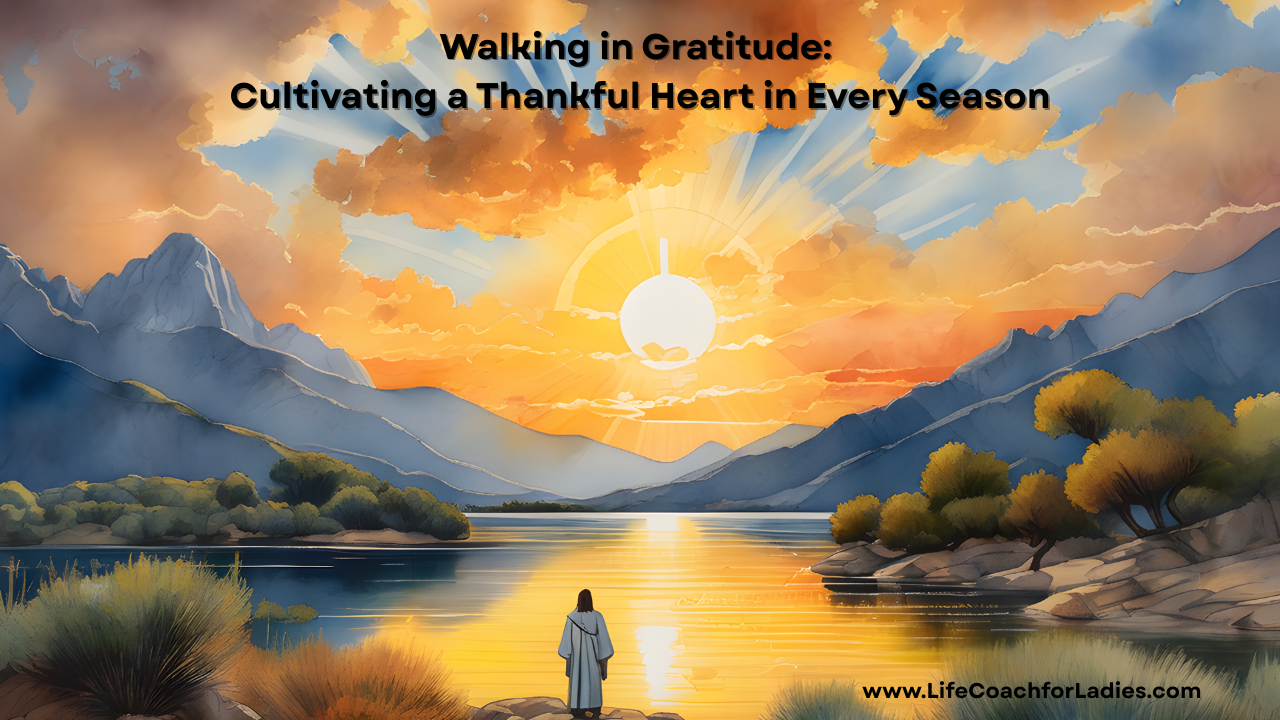
When Gratitude Feels Hard
Gratitude is often celebrated when life feels good—when prayers are answered quickly, relationships feel harmonious, and progress is visible. Yet many faithful women find gratitude most challenging in seasons marked by waiting, disappointment, or quiet endurance.
Scripture never presents gratitude as a denial of difficulty. It presents it as a discipline of the heart—a way of seeing God’s faithfulness even when circumstances remain unresolved.
To walk in gratitude is to choose thankfulness not because life is easy, but because God is faithful in every season.
The Lie We Often Walk With (Lie-Locked Living)
The Lie: I will be grateful once my situation improves.
This lie postpones gratitude and ties thankfulness to outcomes. It suggests that gratitude is a reward for relief rather than a response of faith.
Lie-Locked Living shows up as chronic dissatisfaction, comparison, and a focus on what is missing rather than what God has already provided.
God invit...
Walking in Humility: Serving God Without Needing Recognition
When the Desire to Be Seen Creeps In
Even the most sincere servant of God can feel the quiet tug of wanting to be seen. After long seasons of giving, helping, leading, and showing up, it is human to hope that someone notices. When recognition does not come, discouragement can quietly settle into the heart.
Humility does not deny this desire; it redirects it. Scripture teaches that true humility rests not in being overlooked, but in being secure—secure in God’s approval rather than human affirmation.
To walk in humility is to serve faithfully, trusting that God sees what others may never acknowledge.
The Lie We Often Walk With (Lie-Locked Living)
The Lie: If my service truly mattered, someone would notice or affirm it.
This lie ties worth to visibility. It subtly shifts motivation from obedience to validation, creating disappointment when affirmation is absent.
Lie-Locked Living shows up as resentment, comparison, or the temptation to withdraw when recognition feels insufficient....
Walking in Service: Using Your Gifts to Bless Others
When Service Feels Ordinary—or Overlooked
Many Christian women serve faithfully behind the scenes. They give time, energy, prayer, and care—often without recognition or applause. Over time, service can begin to feel ordinary, unnoticed, or even taken for granted.
Scripture presents service not as a lesser calling, but as a primary expression of love and obedience. God does not measure service by visibility. He measures it by faithfulness and heart.
To walk in service is to intentionally offer what God has placed in your hands for the good of others and the glory of God.
The Lie We Often Walk With (Lie-Locked Living)
The Lie: If my service were truly valuable, it would be more visible or appreciated.
This lie tempts women to undervalue quiet obedience and overvalue recognition. It can lead to discouragement, comparison, or withdrawing from service altogether.
Lie-Locked Living shows up as resentment, burnout, or questioning whether one’s gifts truly matter.
God sees what others ...
Walking in Purpose: Living Intentionally in God’s Calling
When Purpose Feels Bigger Than Today
Many Christian women sense a call on their lives yet struggle to connect it to ordinary days. Purpose can feel expansive and distant—something to be discovered later rather than lived now. This disconnect often creates frustration, comparison, or a quiet feeling of falling short.
Scripture presents purpose differently. God’s calling is not confined to future milestones; it is expressed through present faithfulness.
To walk in purpose is to live intentionally—aligning today’s choices with God’s truth, regardless of visibility or scale.
The Lie We Often Walk With (Lie-Locked Living)
The Lie: I will live in my purpose once my circumstances change.
This lie postpones obedience and undervalues present stewardship. It suggests that purpose requires ideal conditions rather than faithful alignment.
Lie-Locked Living shows up as waiting, comparison, and discontent with current assignments.
God calls His daughters to purpose-filled faithfulness right ...
Walking in Authority: Stepping into God-Given Influence
When Influence Feels Intimidating
Many Christian women sense influence stirring within them long before they feel ready to carry it. Authority can feel intimidating, especially for those who value humility, service, and faithfulness. Too often, authority is confused with dominance or self-promotion, causing women to shrink back from influence God intends them to steward.
Biblical authority is not loud or controlling. It is grounded, delegated, and exercised in alignment with God’s truth.
To walk in authority is to steward influence responsibly—without striving, fear, or comparison.
The Lie We Often Walk With (Lie-Locked Living)
The Lie: If I step into authority, I will appear prideful or overstep my place.
This lie keeps women silent when God has entrusted them with voice and responsibility. It confuses humility with invisibility and obedience with passivity.
Lie-Locked Living shows up as reluctance to lead, avoidance of responsibility, or minimizing one’s God-given influence.
...Walking in Confidence: Living Securely in Your Identity in Christ
When Confidence Feels Fragile
Many Christian women quietly struggle with confidence—not because they lack ability, faith, or calling, but because their sense of worth has been shaped by roles, performance, or past experiences rather than truth. Confidence rises and falls with circumstances when identity is externally anchored.
God never intended confidence to be self-generated. True confidence flows from knowing who you are in Him.
To walk in confidence is to live securely in your identity in Christ—unchaken by opinion, comparison, or changing seasons.
The Lie We Often Walk With (Lie-Locked Living)
The Lie: My value is determined by what I do, how well I perform, or how others perceive me.
This lie keeps women striving for validation. It fuels comparison, people-pleasing, and fear of failure.
Lie-Locked Living shows up as over-preparing, shrinking back, or constantly questioning one’s worth and calling.
Scripture declares that identity precedes assignment.
Scripture Anchor (KJ...
Walking in Resilience: Rising After Setbacks and Disappointment
When the Wind Knocks You Down
Setbacks rarely announce themselves. They arrive as unexpected news, delayed answers, closed doors, or quiet disappointments that linger longer than anticipated. Faithful Christian women often internalize these moments, wondering what went wrong or what they missed.
Resilience is not the ability to avoid falling. It is the willingness to rise again—grounded in truth rather than shame.
God does not abandon His daughters in disappointment. He strengthens them to walk in resilience, lifting their gaze from what was lost to what He is still building.
The Lie We Often Walk With (Lie-Locked Living)
The Lie: If I were truly faithful, I would not experience setbacks like this.
This lie turns disappointment into self-accusation. It suggests that difficulty indicates disfavor rather than development.
Lie-Locked Living shows up as discouragement, withdrawal, comparison, and the temptation to stop trying after a fall.
Scripture presents setbacks not as proof o...
Recent Posts
Author

Coach Sandra
Author
At Life Coach for Ladies, we understand your desire for a life that is truly significant—a life that matters. To achieve this, it is essential to step into the purpose for which you were created. However, the world often misleads us with false notions of significance, making us feel less worthy than we truly are. We believe that God has intricately designed each of us for a unique purpose in His Kingdom. He crafts us with intention, uniquely shaping us for His plans. That is why we help women to recognize their significance in God’s Kingdom and cultivate a Truth Mindset. Here’s how we do it: 1. Embrace your true identity as a ‘daughter of the King.’ 2. Discover the unique gifts that the Holy Spirit has specifically and strategically given you. 3. Learn to walk intentionally in those gifts and draw closer to Christ. Schedule a free Transformational Game Plan Session today. Meanwhile, download my free eBook to help you fill the void you might feel and start living with success, significance, and a meaningful legacy. Sandra Krug is a Board Certified Coach (BCC) through the Center for Credentialing and Education. Coach Sandra is a Certified Master Christian Life Coach (CMCLC) through the International Christian Coaching Institute, with Certification as a Transformed Living Coaching Model Specialist and a Spiritual Transformation and Discipleship Niche Specialist. She is a Certified and Licensed Ziglar Choose to Win and See You at the Top Coach. (Ziglar is a name that has been synonymous with integrity and success for over 50 years.) She is a Certified Disc Profile Analyst and a Certified Human Behavior Consultant through Personality Insights. She is also a Certified Christian DISC Facilitator. Coach Sandra has an Advanced Diploma in Biblical Studies from the International School of Ministry and a Master's in Ministry from Christian Leadership University. She also received an Honorary Doctor of Divinity in Business and Ministry from Vision International. Her Christian values are fundamental to her life and coaching ministry. She resides in Florida with her husband, Garrett, and their ranch of rescued animals.
Stay connected with news and updates!

