
Paul: Transformation That Rewrites Your Story

✨ Step into Transformation
There are moments in life that divide everything into two parts:
Before…
and after.
Before the mistake.
Before the regret.
Before the season that still whispers your name in ways you wish it would not.
And then… something happens.
Something shifts.
Not outwardly at first…
but deeply, quietly, within.
In Acts of the Apostles 9:1–6 (KJV), we meet a man known as Saul.
Strong.
Driven.
Certain.
And completely wrong.
“And as he journeyed, he came near Damascus: and suddenly there shined round about him a light from heaven:” — Acts 9:3 (KJV)
🌿 When God Interrupts the Story
Saul was not searching for truth.
He believed he already had it.
He was actively opposing the very people God was calling him to become.
And yet…
God did not wait for Saul to get it right.
He met him on the road.
Blinding light.
Clear voice.
Undeniable moment.
“Saul, Saul, why persecutest thou me?” — Acts 9:4 (KJV)
This was not just correction.
It was interruptio...
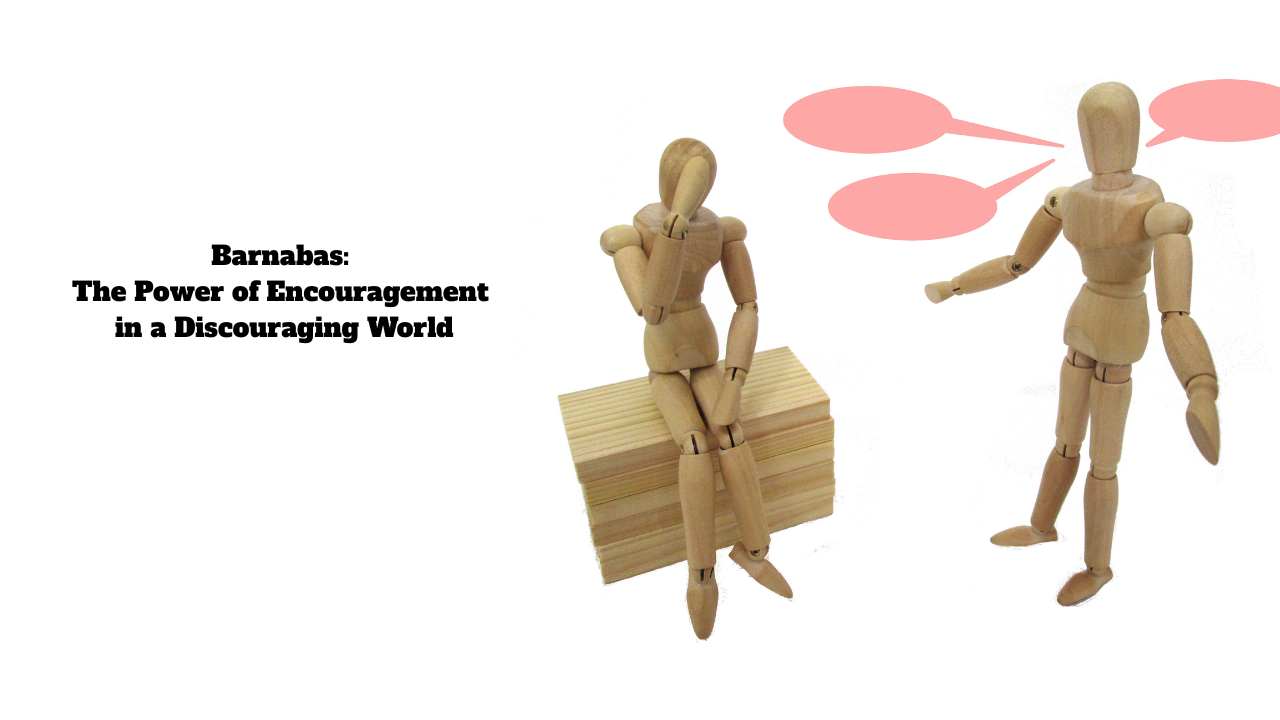
Barnabas: The Power of Encouragement in a Discouraging World
✨ Step into Encouragement
There are voices that drain…
And there are voices that build.
Some words leave a woman questioning herself.
Others call something out of her she did not even realize was there.
And in a world filled with criticism, comparison, and quiet discouragement…
God raises up women who do something different.
They encourage.
In Acts of the Apostles 4:36–37 (KJV), we meet a man whose very name tells the story:
“And Joses… who by the apostles was surnamed Barnabas, (which is, being interpreted, The son of consolation,)…”
Barnabas was not known for position.
He was known for encouragement.
🌿 When Encouragement Becomes a Calling
Barnabas saw what others overlooked.
Where others doubted… he believed.
Where others hesitated… he stepped forward.
When Paul the Apostle was newly converted and still mistrusted, it was Barnabas who brought him in.
“But Barnabas took him, and brought him to the apostles…” — Acts 9:27 (KJV)
He did not wait for certainty.
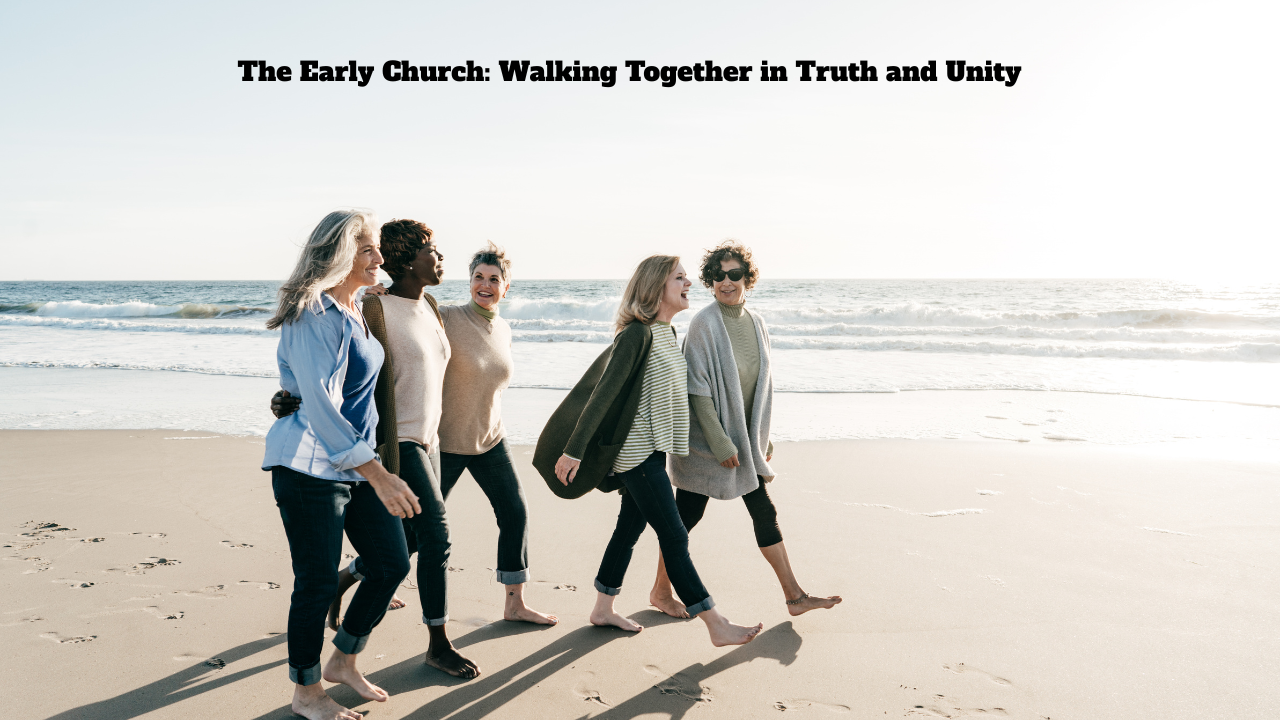
...The Early Church: Walking Together in Truth and Unity
✨ Step into Unity
There is a sacred beauty in a life that is no longer walked alone.
Not because the road becomes easier…
but because it becomes shared.
After all the moments we have walked through—
the surrender of Mary…
the courage of Esther…
the humility of the tax collector…
There comes a quiet question:
Now what?
What does it look like to walk this out… not just personally… but together?
In Acts of the Apostles 2:42–47 (KJV), we are given a glimpse.
Not of a perfect people…
but of a unified one.
“And they continued stedfastly in the apostles’ doctrine and fellowship, and in breaking of bread, and in prayers.” — Acts 2:42 (KJV)
🌿 When Faith Becomes Shared
The early church did not gather out of obligation.
They gathered because something had changed within them.
Truth had taken root.
And truth does not isolate…
it draws together.
They learned together.
They prayed together.
They ate together.
They gave to one another.
And in that rhythm, something holy formed:
...The Tax Collector: The Power of a Humble Prayer
When the Heart Feels Aware of Its Need
Many faithful Christian women desire to walk closely with the Lord.
They read Scripture.
They pray sincerely.
They seek to live with integrity.
Yet there are moments when the heart becomes deeply aware of its own weakness.
Perhaps a reaction that was not gracious.
A thought that needed correction.
A season where faith felt strained.
In those moments, the question quietly rises:
How does God respond when we come to Him aware of our need?
Jesus answered that question through a simple yet powerful parable about two men who went to pray.
Scripture Foundation (KJV)
“God be merciful to me a sinner.”
— Luke 18:13 (KJV)
This brief prayer carries profound spiritual weight.
It reveals a heart that approaches God with honesty, humility, and trust in His mercy.
Two Approaches to Prayer
In the parable, Jesus contrasts two men:
A Pharisee and a tax collector.
The Pharisee prayed confidently about his own righteousness.
He listed his sp...
Mary of Bethany: Choosing the Better Part
When Life Feels Full and Busy
Many faithful Christian women desire to live lives that honor the Lord.
They care for families.
They serve others.
They manage responsibilities.
Their days are often full.
Yet in the middle of full schedules, an honest question sometimes rises:
Am I making space for what matters most?
The story of Mary of Bethany offers one of the most beautiful reminders in Scripture about spiritual priorities.
Because sometimes the most important step is simply sitting near Jesus.
Scripture Foundation (KJV)
“And she had a sister called Mary, which also sat at Jesus’ feet, and heard his word.”
— Luke 10:39 (KJV)
In a home filled with activity, Mary made a quiet but powerful choice.
She sat.
She listened.
She received.
The Tension in the Room
The setting of this story feels very familiar to many women.
Martha was serving diligently.
Her work mattered.
Her effort was sincere.
Yet frustration began to grow when she noticed Mary was not helping wi...
The Thankful Leper: Returning to Give Thanks
When Blessings Become Familiar
Many faithful Christian women pray earnestly for God’s help.
They seek healing.
They ask for provision.
They cry out for guidance.
And God, in His mercy, often answers.
Yet sometimes something subtle happens afterward.
Life moves on.
Responsibilities return.
The miracle slowly blends into ordinary days.
The story of the thankful leper gently reminds us that gratitude is not merely polite—it is spiritually powerful.
Because the heart that returns in gratitude grows deeper in relationship with the Lord.
Scripture Foundation (KJV)
“And one of them, when he saw that he was healed, turned back, and with a loud voice glorified God.”
— Luke 17:15 (KJV)
Ten men were healed.
But only one returned.
And Jesus noticed.
The Moment That Set Him Apart
All ten lepers experienced the same miracle.
They were cleansed.
Their suffering ended.
Their future changed.
Yet one man paused long enough to recognize the Source of his healing.
He turned ba...
The Persistent Widow: Faith That Refuses to Give Up
When Answers Take Time
Many faithful Christian women pray sincerely.
They bring concerns before the Lord.
They ask for wisdom.
They seek His intervention.
Yet sometimes the answer does not come quickly.
Days stretch into weeks.
Weeks into months.
And occasionally even longer.
In those seasons, a quiet question may rise:
Does my prayer still matter if the answer has not come yet?
Jesus addressed this very tension through the story of the persistent widow — a parable designed to strengthen faith during seasons of waiting.
Because persistent prayer is never wasted.
Scripture Foundation (KJV)
“And shall not God avenge his own elect, which cry day and night unto him…?”
— Luke 18:7 (KJV)
Jesus told this parable to remind His followers that God sees, hears, and responds — even when answers unfold slowly.
The Widow’s Determined Heart
In the story, the widow faced an unjust situation.
She had little social power.
Few resources.
No influential connections.
Yet she posses...
The Widow’s Mite: Giving That Heaven Sees
When What You Have Feels Small
Many faithful Christian women desire to honor the Lord with what they have.
They give.
They serve.
They steward carefully.
Yet sometimes a quiet question rises:
Does my small offering really matter?
In a world that often measures impact by size and visibility, the story of the widow’s mite offers one of Scripture’s most comforting and clarifying perspectives.
Because heaven measures differently.
Scripture Foundation (KJV)
“For all they did cast in of their abundance; but she of her want did cast in all that she had…”
— Mark 12:44 (KJV)
Jesus was watching.
Not the large gifts.
The heart behind the giving.
And the smallest offering became the greatest lesson.
The Quiet Power of Her Gift
Consider what made her offering remarkable.
It was:
-
sacrificial
-
sincere
-
unseen by most
-
deeply personal
-
given in trust
Humanly speaking, her gift looked insignificant.
Heavenly speaking, it was unforgettable.
The Lie...
The Woman with the Issue of Blood: Faith That Presses Through
When You Have Tried Everything
Many faithful Christian women carry private battles.
They pray.
They hope.
They seek solutions.
Yet sometimes the struggle lingers longer than expected.
In those tender seasons, a quiet question often rises:
What do I do when my breakthrough feels delayed?
If you have ever felt weary from waiting yet still hopeful for God’s touch, the woman with the issue of blood offers one of Scripture’s most hope-filled portraits of determined faith.
Because sometimes faith must press through the crowd.
Scripture Foundation (KJV)
“If I may touch but his clothes, I shall be whole.”
— Mark 5:28 (KJV)
These words reveal both her desperation and her deep confidence.
She did not know how.
But she believed Who.
The Weight She Carried
Scripture tells us she had suffered twelve years.
Consider what that likely meant:
-
physical weakness
-
emotional exhaustion
-
financial strain
-
social isolation
-
repeated disappointment
Humanly sp...
The Woman at the Well: When Jesus Meets You in the Middle of Your Story
When Your Story Feels Complicated
Many faithful Christian women love the Lord deeply… yet still carry places in their story that feel tender.
Past mistakes.
Relational disappointments.
Seasons that did not unfold as hoped.
Sometimes an honest question rises quietly in the heart:
Can God truly meet me right in the middle of my unfinished story?
If you have ever wondered whether Jesus draws near to imperfect places, the woman at the well offers one of the most hope-filled encounters in all of Scripture.
Because Jesus is never hesitant to meet a searching heart.
Scripture Foundation (KJV)
“Jesus saith unto her, Give me to drink.”
— John 4:7 (KJV)
At first glance, the moment feels simple.
But beneath the surface, something profound is unfolding.
Jesus intentionally steps into her ordinary day… and everything begins to change.
The Weight She Carried
Scripture gently reveals layers of her situation:
-
relational complexity
-
social isolation
-
spiritual thirst
...
Recent Posts
Author

Coach Sandra
Author
At Life Coach for Ladies, we understand your desire for a life that is truly significant—a life that matters. To achieve this, it is essential to step into the purpose for which you were created. However, the world often misleads us with false notions of significance, making us feel less worthy than we truly are. We believe that God has intricately designed each of us for a unique purpose in His Kingdom. He crafts us with intention, uniquely shaping us for His plans. That is why we help women to recognize their significance in God’s Kingdom and cultivate a Truth Mindset. Here’s how we do it: 1. Embrace your true identity as a ‘daughter of the King.’ 2. Discover the unique gifts that the Holy Spirit has specifically and strategically given you. 3. Learn to walk intentionally in those gifts and draw closer to Christ. Schedule a free Transformational Game Plan Session today. Meanwhile, download my free eBook to help you fill the void you might feel and start living with success, significance, and a meaningful legacy. Sandra Krug is a Board Certified Coach (BCC) through the Center for Credentialing and Education. Coach Sandra is a Certified Master Christian Life Coach (CMCLC) through the International Christian Coaching Institute, with Certification as a Transformed Living Coaching Model Specialist and a Spiritual Transformation and Discipleship Niche Specialist. She is a Certified and Licensed Ziglar Choose to Win and See You at the Top Coach. (Ziglar is a name that has been synonymous with integrity and success for over 50 years.) She is a Certified Disc Profile Analyst and a Certified Human Behavior Consultant through Personality Insights. She is also a Certified Christian DISC Facilitator. Coach Sandra has an Advanced Diploma in Biblical Studies from the International School of Ministry and a Master's in Ministry from Christian Leadership University. She also received an Honorary Doctor of Divinity in Business and Ministry from Vision International. Her Christian values are fundamental to her life and coaching ministry. She resides in Florida with her husband, Garrett, and their ranch of rescued animals.
Stay connected with news and updates!

